
A 10-Minute Mobility Routine for Anyone Who Sits All Day
If you sit for a living, your body quietly pays for it: tight hips, a stiff upper back, and shoulders that creep toward your ears by mid-afternoon. The good news is that a short daily mobility routine, ten focused minutes you can do right beside your desk, is often enough to undo a lot of that stiffness and help you move, and feel, noticeably better. No gym, no special gear, and no lunch break long enough to change clothes required.
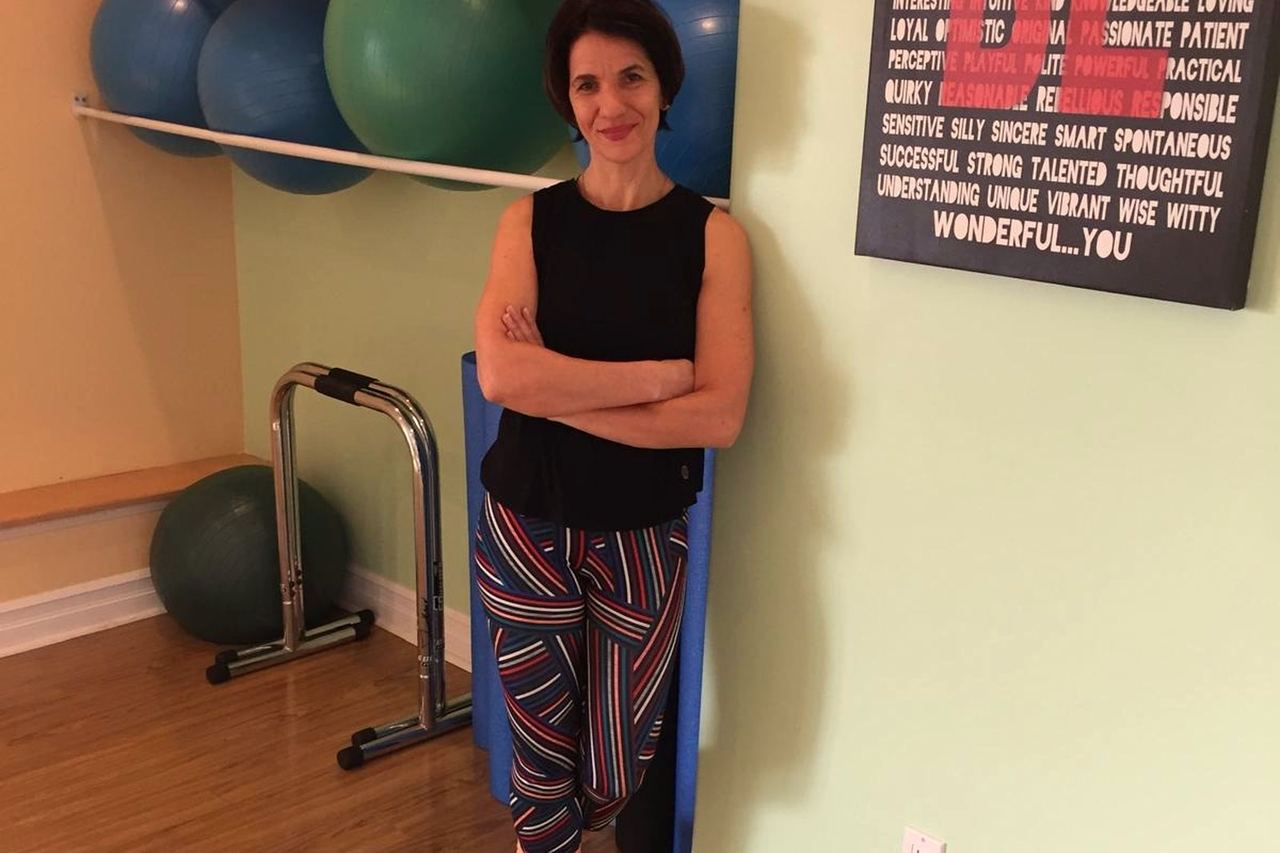
I’m Elena Tonietto, a fitness professional since 2004 and a Pilates instructor certified in 2007, and I’ve spent years helping busy people and older adults in North Bay move with more ease. Below is the exact ten-minute sequence I recommend to clients who spend their days at a keyboard, plus a few honest tips for actually sticking with it through a long Ontario winter.
Why Desk Life Leaves You Stiff
Your body adapts to the shapes you hold most often. Sit for eight or nine hours and it slowly learns that shape: hip flexors shorten, glutes switch off, the mid-back rounds, and the neck juts forward to meet the screen. None of this is damage, it’s simply your tissues settling into the position you give them most. The fix is to give them a different message, often.
This matters even more in the Canadian winter, when the walk to the car is short, the trail is icy, and the couch is warm. Movement naturally drops off between November and April, and stiffness has a way of compounding. A brief, consistent mobility routine is your counter-move: small, frequent doses of motion that keep joints lubricated and muscles awake, no matter what the weather is doing outside.
What a Mobility Routine Actually Does
People often lump stretching and mobility together, but they aren’t quite the same. Stretching lengthens a muscle and holds it. A mobility routine is about taking your joints through their available range with control, so you build usable, comfortable movement rather than just a passive stretch. Think slow spinal rolls, controlled hip circles, and gentle rotations rather than yanking on a tight hamstring.
Research suggests that moving your joints regularly supports circulation, comfort and range of motion, and many desk workers find that a few minutes of daily mobility eases that end-of-day tightness and helps them feel more upright. It also builds body awareness, the same quality I emphasize in functional strength and mobility coaching, where the goal is a body that feels capable in everyday life, not just in the gym.
The 10-Minute Desk Mobility Routine
Here is the full sequence. Move slowly, breathe steadily, and never push into sharp pain, only into a comfortable stretch or gentle effort. You can do all of it standing, or use your chair where noted. Aim for one round through, roughly ten minutes.
- Seated cat-cow (1 min): Sit tall, hands on knees. Inhale and gently arch, lifting your chest; exhale and round your back, tucking your chin. Flow slowly for 8 to 10 breaths to wake up your spine.
- Neck releases (1 min): Draw your chin gently back (a light double chin), then tilt your ear toward each shoulder, holding a breath or two per side. Keep the movement small and slow.
- Shoulder rolls and chest opener (1 min): Roll your shoulders back 8 times, then clasp your hands behind you (or hold a doorway) and open across the chest to counter that hunched position.
- Seated spinal twist (1 min): Sit tall, place one hand on the opposite knee and rotate gently from the ribs, looking over your shoulder. Hold 20 to 30 seconds each side, lengthening upward as you turn.
- Standing hip flexor stretch (1.5 min): Step one foot back into a soft lunge, tuck your tailbone, and feel the front of the back hip open. Hold about 30 to 45 seconds per side, this is the antidote to hours of sitting.
- Standing figure-four (1.5 min): Cross one ankle over the opposite thigh, hold a chair for balance, and hinge back slightly to stretch the glute. Hold 30 seconds per side to release those switched-off muscles.
- Hip circles and ankle rolls (1 min): Hands on hips, draw 5 slow circles each direction, then lift each foot and circle the ankle 5 times each way to restore movement lower down.
- Wrist and forearm mobility (1 min): Extend one arm, gently draw the fingers back, then down, holding a few seconds each. Keyboard hands deserve attention too.
- Standing forward fold and roll-up (1 min): Soft knees, hinge and hang, let your head and arms be heavy for a few breaths, then roll up one vertebra at a time to finish tall.
Where Pilates Makes the Difference
Everything in this routine borrows from principles I teach in Pilates: controlled movement, steady breath, and spinal articulation, that roll-up-one-vertebra-at-a-time quality that so many desk-bound bodies have lost. Pilates trains the deep core and postural muscles that hold you upright without effort, which is exactly what fades when you sit all day.
If your stiffness is mostly in the back and shoulders, my article on core strength and better posture pairs well with this routine, and for hands-on refinement of your alignment, a private Pilates session lets us tailor the movements to your body. You don’t need to be flexible or experienced to start, only willing to move a little, often.
Making It Stick Through an Ontario Winter
The routine only works if you actually do it, and consistency, not intensity, is what changes how you feel. The trick is to anchor the ten minutes to something you already do so it doesn’t rely on motivation. Here is what I suggest to clients who struggle to keep a habit alive once the snow arrives and the days get short.
- Attach it to a trigger: do it right after your morning coffee, before your first meeting, or the moment you close your laptop for the day.
- Set a mid-afternoon phone reminder for a 2-minute mini-version (twist, hip flexor, forward fold) to break up long stretches of sitting.
- Keep it visible: leave a note on your monitor through the winter months when movement naturally drops off.
- Track it simply. A checkmark on the calendar for each day you move builds momentum faster than any app.
- Pair it with warmth: a few minutes of mobility is a lovely way to thaw out after shovelling the driveway or coming in from the cold.
A Quick Setup Checklist
Before your first round, run through this to keep the routine safe and comfortable.
- Clear a small space beside your desk, roughly the size of a bath towel.
- Have a sturdy chair or wall nearby for balance during standing moves.
- Wear something you can move in, or simply loosen anything restrictive.
- Warm up naturally if you’re cold, do a few shoulder rolls and marches on the spot first.
- Check with your physician before starting any new exercise routine, especially if you have an injury, are pregnant, or manage a health condition.
- Stop and ease off any movement that causes sharp or radiating pain, mobility should feel like relief, not strain.
Frequently asked questions
How often should I do this mobility routine?
Daily is ideal, and even three to four times a week makes a real difference. Because it's low-intensity, it's safe to do every day, and short daily doses tend to help more than one long session.
Can I do this if I'm a total beginner or over 50?
Absolutely. Every move can be scaled, done seated, or supported by a chair. Specializing in older-adult fitness is a big part of my work, and gentle, controlled mobility is one of the most valuable things you can do at any age. Always check with your doctor first if you have health concerns.
Will ten minutes really help if I sit for eight hours?
It helps more than you'd expect. Many people find that consistent daily mobility eases end-of-day stiffness and helps them sit taller. For deeper change, pair it with a couple of standing breaks and a weekly strength or Pilates session.
Do you offer this kind of coaching online?
Yes. I coach clients in person around North Bay and Nipissing District, and online across Canada and the USA, so we can build a mobility and movement plan together wherever you are.
Ready to feel your best?
Your body wasn’t built to sit still, but it responds beautifully to small, kind, consistent movement. Start with these ten minutes tomorrow, and let me help you build on it. If you’d like moves tailored to your posture, your goals and your winter schedule, book a free intro call or try a private Pilates session with me, and we’ll get you moving well, ageing strong, and feeling vibrant, one easy habit at a time.
Note: the information in this article is general in nature and may change over time. It is not individual medical or fitness advice. For guidance tailored to your situation, get in touch or call (519) 209-3500.